
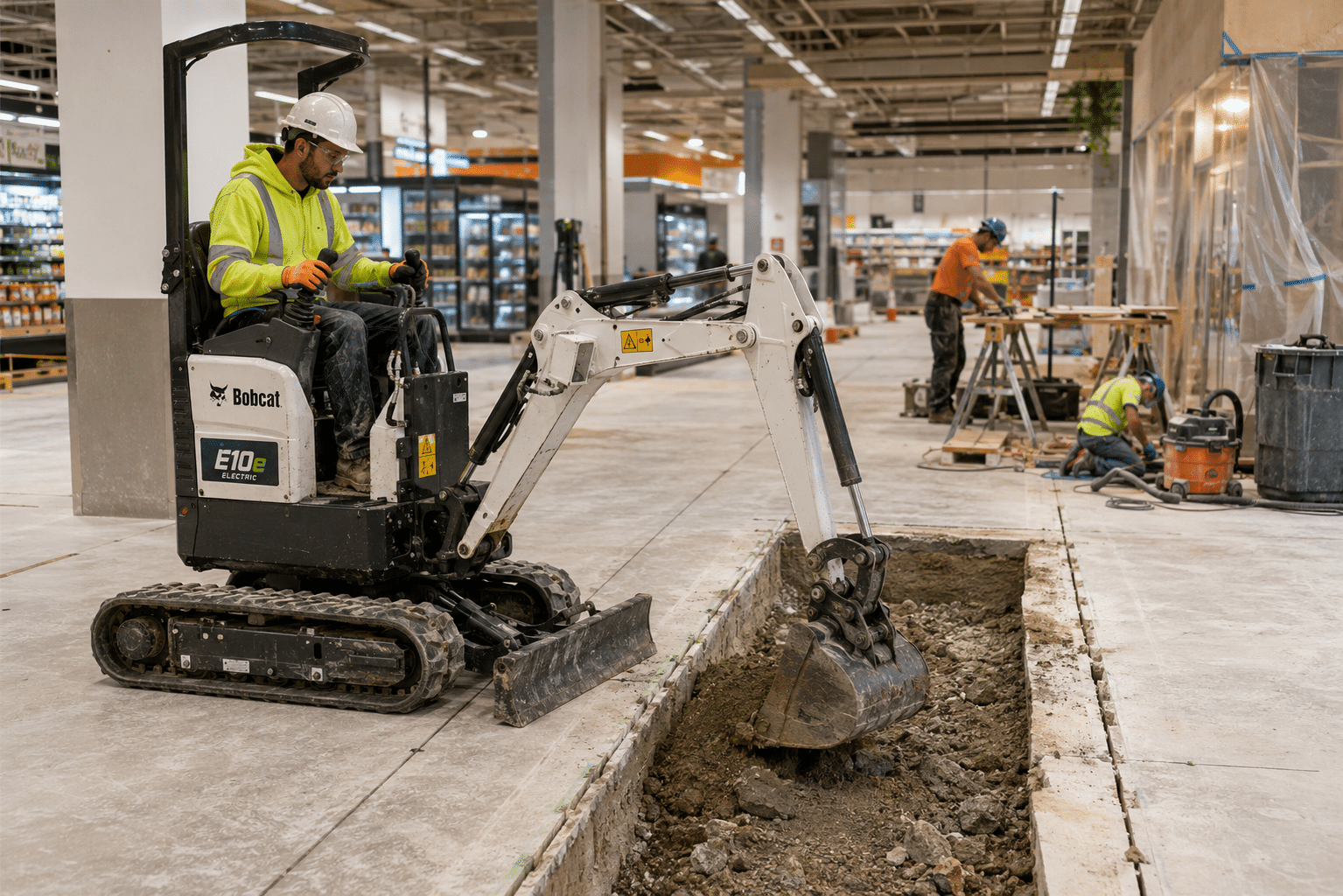
Indoor commercial construction requires more than specialized equipment. It depends on careful planning, coordinated trades, and construction methods that support work in active buildings with minimal disruption. For projects involving indoor concrete cutting and utility installation, electric excavation is often the preferred solution when clean workflows, occupied facilities, and project coordination are priorities.
General contractors, mechanical contractors, plumbing contractors, refrigeration contractors, and facility managers across London, Cambridge, Kitchener-Waterloo, and Southwestern Ontario frequently work in environments where access is restricted and surrounding operations must continue. In these settings, choosing the right excavation method helps create an efficient workflow from concrete cutting through utility installation and project completion.
Indoor Construction Requires a Different Approach
Commercial renovation projects present challenges that differ significantly from new construction or outdoor excavation. Many projects take place inside occupied buildings where employees, customers, or production activities remain on site throughout construction. Others occur in manufacturing facilities, warehouses, retail stores, or institutional buildings where maintaining safe access and organized work areas is essential.
Traditional excavation methods are not always practical indoors. Limited entry points, enclosed workspaces, existing infrastructure, and multiple trades working simultaneously all influence how excavation work should be planned. Contractors must also consider material removal, equipment access, and how each stage of work affects the overall construction schedule.
For these reasons, selecting an indoor excavation contractor is about more than completing excavation work. It is about choosing an approach that fits the operational requirements of the building and supports the broader commercial renovation project.
Why Electric Excavation Supports Cleaner Commercial Workflows
Electric excavation is well suited for many indoor commercial construction projects because it supports work in enclosed environments where organized job sites and coordinated construction activities are priorities. Rather than viewing excavation as an isolated task, experienced contractors integrate it into the overall renovation sequence.
Complete Cutting’s Electric Excavation service supports commercial construction projects where excavation follows carefully planned concrete cutting activities. This coordinated approach allows floor openings, trenching, utility installation, and concrete removal to progress in an organized sequence that aligns with the overall project schedule.
Electric excavation is particularly valuable when multiple contractors are working within the same area. Mechanical, plumbing, refrigeration, and electrical trades often rely on excavation work being completed at the right stage so their installations can proceed without unnecessary delays. Coordinating these activities helps maintain efficient workflows throughout the project.
Because indoor renovations frequently involve occupied facilities, maintaining clean and organized work areas also becomes an important part of project planning. Selecting excavation methods that align with these operational requirements helps project teams manage construction activities more effectively.
Working Together with Concrete Cutting Services
Successful commercial concrete cutting projects rarely depend on a single service. Instead, floor sawing, concrete trenching, excavation, and core drilling are typically planned as interconnected stages of the same project.
The process often begins with Floor Sawing, which creates precise slab openings for planned utility routes. Accurate saw cuts establish the boundaries for excavation while helping contractors remove only the concrete necessary for the installation.
Once the slab has been cut, excavation can begin to expose the required depth for new utilities. Whether the project involves plumbing systems, electrical conduit, refrigeration piping, or mechanical services, coordinating excavation immediately after concrete cutting helps maintain project momentum.
Many commercial renovations also require new penetrations through existing concrete walls or floors. Core Drilling provides accurately located openings for pipes, conduit, ventilation systems, and other building services. Planning these penetrations alongside excavation reduces conflicts between trades and helps ensure installations proceed according to the project schedule.
For projects involving underground utility installation within existing slabs, Concrete Trenching & Interior Slab Cutting works together with excavation to create continuous pathways for new infrastructure. Rather than treating each service independently, contractors benefit from planning floor sawing, trenching, excavation, and core drilling as one coordinated workflow.
This integrated approach helps reduce scheduling conflicts while giving project managers greater visibility into how each phase supports the next.
Where Contractors Commonly Use Electric Excavation
Electric excavation is commonly selected for indoor commercial and industrial projects where construction activities must fit within active operations.
Examples include grocery stores, food-processing facilities, warehouses, manufacturing plants, commercial office renovations, refrigeration upgrades, mechanical system replacements, and utility modernization projects. Each environment has its own operational requirements, making early planning an important part of project success.
Facilities that operate throughout construction often require contractors to carefully sequence work around business activities. Access routes, temporary barriers, material removal, and trade coordination all influence how excavation and concrete cutting are performed.
Projects requiring particularly clean construction practices, including those highlighted on Complete Cutting’s Grocery Store & Food Processing page, demonstrate the importance of selecting construction methods that support organized indoor renovation workflows.
While electric excavation is not the right solution for every project, it can provide operational advantages for indoor commercial applications where coordination, accessibility, and workflow efficiency are key considerations.
Planning for Efficient Commercial Renovations
Efficient commercial renovations begin well before concrete is cut. Early planning allows contractors to determine the best sequence for floor sawing, excavation, trenching, utility installation, and concrete restoration before work begins.
Project managers often coordinate multiple subcontractors working within the same space. Mechanical contractors may require trenching before installing piping, while electricians and plumbing contractors depend on completed excavation before beginning their own work. Identifying these dependencies early helps reduce delays and supports more predictable project schedules.
Planning also includes evaluating site access, material staging, debris removal, and temporary pathways through occupied buildings. Addressing these logistical considerations before construction starts helps maintain safer, more organized work areas throughout the renovation.
Selecting the appropriate concrete cutting and excavation methods at the planning stage allows project teams to choose solutions that best fit the building, project scope, and operational requirements.
Partnering with an Experienced Commercial Concrete Cutting Contractor
Commercial renovation projects require more than individual construction services. They require coordination between concrete cutting, excavation, trenching, and utility installation to keep projects progressing efficiently.
Complete Cutting supports commercial and industrial construction projects across Southwestern Ontario by planning these services as part of an integrated workflow. Whether the project involves indoor concrete cutting, floor sawing, core drilling, or electric excavation, careful coordination helps contractors complete work efficiently while supporting the operational needs of occupied facilities.
Request an Estimate