
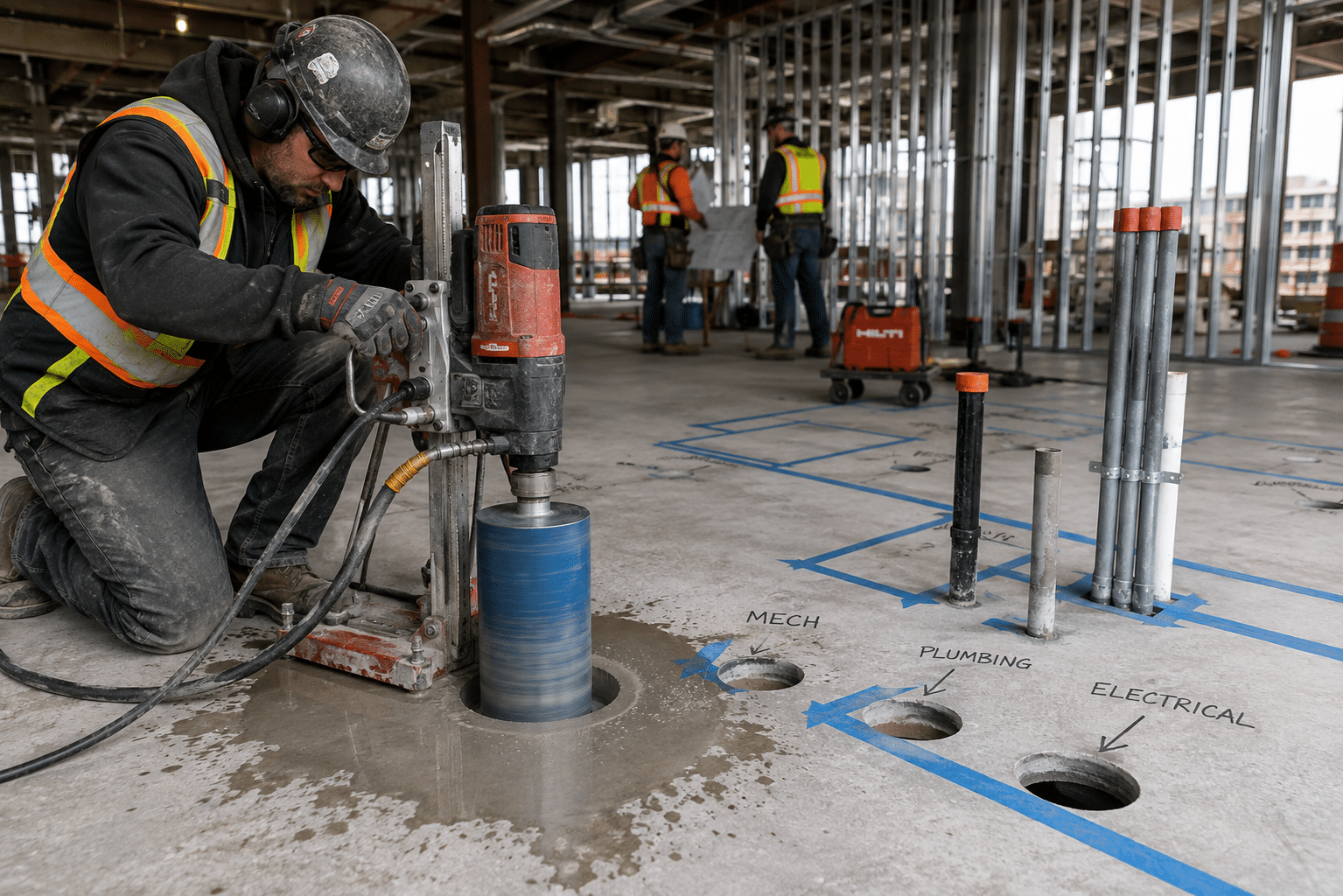
Commercial renovations, equipment installations, and building upgrades regularly require new routes through existing concrete. Mechanical, plumbing, electrical, refrigeration, and other building services may need penetrations through concrete floors or walls to accommodate new infrastructure.
For contractors coordinating this work in London, precise concrete penetrations can help keep installations aligned with project requirements. Complete Cutting & Coring provides commercial concrete cutting and coring services in London for projects involving existing concrete, building upgrades, and multiple trades.
Where Core Drilling Fits Into Commercial Construction
Core drilling creates circular concrete penetrations for building services, equipment connections, piping, conduit, and other infrastructure. It can be used in concrete floors and walls, including reinforced concrete, when the planned installation calls for this type of opening.
The work involves more than simply drilling a hole. Penetration location, required diameter, concrete conditions, surrounding services, access, and the requirements of the installing trade all affect how the work should be planned.
This becomes particularly important on renovations and retrofits. Existing buildings may contain utilities, finished areas, operating equipment, and other conditions that need to be considered when planning new penetrations.
Project-specific structural requirements may also need to be established by the appropriate project professionals before work proceeds. The required opening needs to fit within the broader construction plan rather than being considered independently from the building and the services being installed.
For renovations, equipment installations, and building upgrades, concrete core drilling provides a focused method for creating individual penetrations without removing substantially more concrete than the installation requires.
Core Drilling for Mechanical and HVAC Installations
Commercial mechanical work can require concrete penetrations for piping, HVAC infrastructure, refrigeration systems, equipment connections, and other mechanical services. These requirements often arise when existing buildings are modified to accommodate new layouts or upgraded systems.
A mechanical retrofit, for example, may require a new piping route between floors or through an existing concrete wall. Equipment replacement can also change where services need to enter or leave a mechanical area.
The drilling location and required opening should be coordinated with the mechanical contractor before cutting begins. The contractor responsible for the installation can identify where the service needs to run and what opening is required for the planned work.
Early coordination also helps prevent concrete drilling from becoming disconnected from the rest of the installation sequence. When penetrations are identified during planning, they can be incorporated into the schedule alongside other mechanical and construction activities.
Core Drilling for Commercial Plumbing
Commercial plumbing is another common application for concrete core drilling. Water lines, drainage and waste lines, new fixtures, equipment connections, and plumbing retrofits may all require routes through existing concrete.
This is especially relevant during commercial renovations. A new layout may place plumbing fixtures or equipment in locations that were not anticipated when the original concrete slab was constructed.
As a result, the plumbing plan may require new floor penetrations to connect services between levels or reach existing infrastructure. These penetrations need to correspond with the actual plumbing layout rather than being positioned independently of the trade performing the installation.
Planning the concrete work alongside the plumbing scope can also help identify when multiple penetrations are required in the same work area. This gives contractors an opportunity to coordinate access and sequencing before concrete drilling begins.
Core Drilling for Electrical and Building Services
Electrical installations can also create requirements for concrete penetrations. Conduit routes, electrical service penetrations, communications infrastructure, equipment installations, and other building upgrades may need openings through concrete floors or walls.
This can occur during tenant improvements, facility upgrades, equipment changes, or broader commercial renovations where electrical infrastructure must be extended into new areas.
Not every electrical or utility installation requires core drilling. The appropriate cutting method depends on the required opening and route, along with the conditions of the existing concrete and the overall project plan.
For contractors, the important step is identifying the required route before concrete work begins. Clear locations allow drilling requirements to be coordinated with the electrical contractor and other trades working in the same area.
When a Project Needs More Than Core Drilling
Individual circular penetrations and continuous utility routes present different concrete cutting requirements. A pipe or conduit passing through a slab may call for an individual penetration, while a longer utility route may require continuous access through or beneath the concrete.
When a project requires that type of access, concrete trenching and interior slab cutting may form part of the work instead.
Some commercial projects require multiple concrete cutting methods. Identifying where individual penetrations end and longer utility routes begin helps contractors coordinate drilling, cutting, and trenching without turning method selection into a last-minute decision.
Planning Core Drilling on Active Commercial Projects
Core drilling requirements are easier to coordinate when they are identified during project planning. Waiting until an installing trade reaches a concrete floor or wall can introduce avoidable scheduling and access issues.
Contractors can begin by confirming penetration locations with the mechanical, plumbing, electrical, refrigeration, or other trade responsible for the installation. The required openings can then be considered alongside existing utilities, access restrictions, and other construction activities.
Work sequencing is another consideration. On an active commercial project, several trades may need access to the same rooms, floors, or service areas. Knowing where concrete penetrations are required helps the project team determine when drilling should take place relative to the surrounding work.
Occupied commercial buildings can add another layer of coordination. Access to work areas, ongoing facility operations, and nearby occupants may all affect scheduling. Clear communication before crews arrive gives the project team an opportunity to address these practical requirements.
Contractors should also communicate relevant site information and installation requirements before drilling begins. The objective is to make the concrete work part of the planned construction sequence rather than a separate task discovered after other work is already underway.
Coordinating Commercial Core Drilling in London
Commercial renovations, industrial upgrades, building service installations, and multi-trade projects can involve concrete cutting requirements beyond a single penetration. The drilling scope may need to fit alongside mechanical work, plumbing, electrical installations, interior slab modifications, or other construction activities.
Complete Cutting & Coring works within this broader project context, including projects where core drilling must be coordinated with other commercial and industrial concrete cutting services.
For general contractors, trade contractors, facility managers, and project managers, early identification of concrete penetrations can support more practical coordination. Providing clear information about locations, installation requirements, site access, and sequencing gives the concrete cutting crew a stronger basis for planning its portion of the work.
For commercial core drilling in London, Ontario, discuss the required penetrations and project conditions before the work reaches the cutting stage.
Request an Estimate
Call (519) 465-4107.