
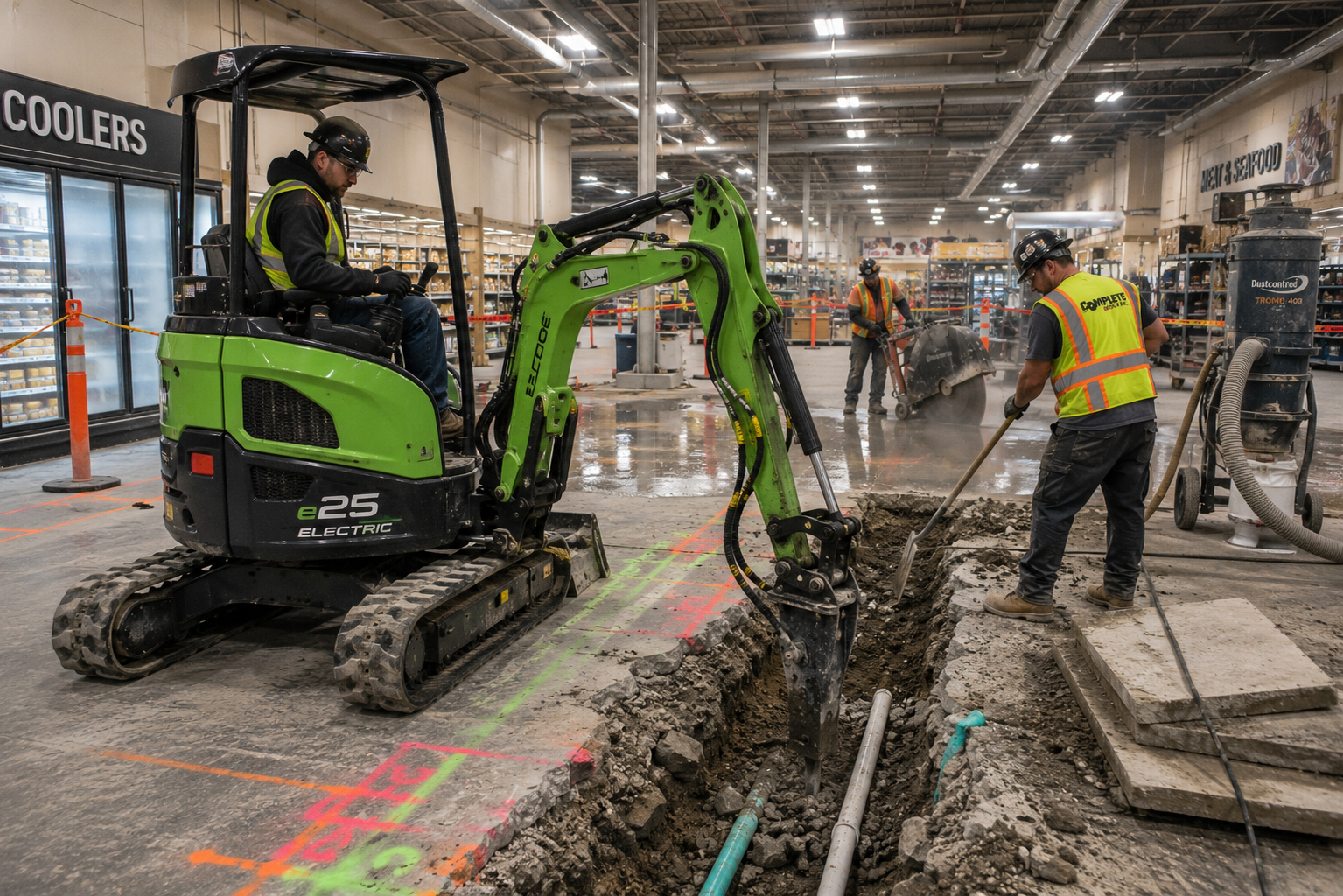
Indoor excavation projects require a different level of planning than outdoor site work. Commercial and industrial facilities often involve occupied spaces, limited access points, active operations, and multiple trades working simultaneously within controlled environments. In these settings, the excavation method directly affects workflow coordination, scheduling, cleanliness, and operational disruption.
Electric excavation has become an increasingly practical solution for indoor commercial projects because it supports controlled excavation work in enclosed environments where airflow, space limitations, and coordination matter. For contractors and facility managers, the value is not simply the equipment itself. The real advantage is the ability to maintain cleaner, more manageable work conditions while supporting trenching, utility installation, and renovation workflows inside active facilities.
What Is Electric Excavation?
Electric excavation uses indoor-capable excavation equipment to perform digging, trenching, and material removal within enclosed commercial and industrial environments. It is commonly used during renovation projects, utility upgrades, refrigeration installations, and infrastructure modifications where conventional excavation equipment may create operational challenges.
For projects that require fumeless operation and controlled indoor workflows, electric excavation services help contractors complete excavation work in environments where airflow and operational continuity are important considerations. This is especially valuable inside facilities that remain partially operational during construction.
Electric excavation is not primarily about environmental branding or marketing claims. Its practical value comes from improving workability inside enclosed spaces where ventilation, access, and disruption must be managed carefully.
Commercial and industrial projects often involve confined corridors, production areas, retail spaces, storage facilities, or active service environments where large conventional excavation equipment may not be suitable. Electric excavation allows contractors to maintain tighter control over movement, workflow sequencing, and site coordination while completing necessary underground work.
Electric excavation is frequently coordinated with slab cutting, trenching, and utility routing scopes to support efficient installation planning. In many indoor projects, excavation is only one component of a larger sequence involving concrete cutting, mechanical upgrades, plumbing infrastructure, or refrigeration system modifications.
Use electric excavation when indoor operational conditions make conventional excavation equipment difficult or disruptive.
Why Traditional Excavation Equipment Creates Challenges Indoors
Conventional excavation equipment can create several challenges when used inside enclosed commercial facilities. Fuel-powered machines may raise ventilation concerns in environments with limited airflow, occupied work areas, or sensitive operations. Larger equipment can also create logistical difficulties in confined spaces where contractors must maintain controlled access and protect surrounding operations.
Indoor excavation is not simply smaller outdoor excavation. Commercial interiors require a different level of operational planning and coordination. Contractors often need to manage work zones, pedestrian access, noise levels, dust control, and trade sequencing while maintaining project progress inside active buildings.
Many facilities cannot fully shut down during construction activities. Grocery stores, food-processing facilities, warehouses, manufacturing operations, and commercial buildings frequently continue operating while renovation or infrastructure work takes place nearby. In these environments, excavation workflows must be planned around business operations rather than isolated construction zones.
Traditional excavation equipment may also create unnecessary disruption when maneuvering through restricted indoor spaces. Access limitations, low-clearance areas, and operational traffic routes can make large equipment impractical for interior work.
Electric excavation becomes valuable when contractors need safer, cleaner, and more controlled workflows inside operational facilities. The ability to support indoor trenching and excavation without creating additional ventilation or workflow complications helps improve coordination between trades and facility operations.
Where Electric Excavation Is Commonly Used
Electric excavation is commonly used in projects involving refrigeration trenching, utility installations, plumbing upgrades, mechanical system modifications, and interior commercial renovations. It also supports industrial facility upgrades where underground utilities must be accessed, rerouted, or expanded within occupied structures.
Commercial renovation teams often rely on electric excavation during projects involving interior utility routing or infrastructure changes beneath existing slabs. These projects may include drainage work, electrical upgrades, refrigeration piping, process line modifications, or mechanical system installations.
Many of these applications require coordinated concrete cutting before excavation begins. For example, utility installations frequently involve core drilling services to create service penetrations through slabs, walls, or structural elements alongside trenching work. Coordinating these scopes early helps reduce delays and improve workflow sequencing between trades.
Electric excavation is especially useful in limited-access work areas where conventional excavation equipment may be difficult to position or operate effectively. Indoor commercial projects often involve restricted corridors, occupied tenant spaces, back-of-house utility areas, or operational production environments where controlled excavation workflows are necessary.
Electric excavation is commonly selected when indoor access, operational continuity, and controlled workflows are project priorities.
Electric Excavation for Grocery Stores & Food-Processing Facilities
Grocery stores and food-processing facilities present unique operational challenges during renovation and infrastructure projects. These environments often require contractors to work around refrigeration systems, food-handling areas, active operations, and strict scheduling requirements while minimizing disruption to business activities.
Projects in these sensitive settings frequently involve grocery store and food-processing concrete cutting alongside trenching and excavation work. Contractors may need to complete utility routing, refrigeration upgrades, or drainage modifications while maintaining controlled indoor conditions throughout the project.
Electric excavation supports these workflows by helping contractors manage indoor access and excavation activities more effectively within operational environments. This is particularly important when projects require coordination between slab cutting crews, excavation teams, mechanical contractors, refrigeration installers, and facility management personnel.
Workflow control becomes critical in facilities where scheduling and operational continuity directly affect project success. Many grocery and food-processing environments cannot tolerate unnecessary disruption, poorly coordinated work areas, or uncontrolled construction sequencing.
Electric excavation helps support projects where cleaner indoor conditions and operational coordination are important factors during construction and renovation activities.
Combining Slab Cutting, Trenching & Excavation
Successful indoor excavation projects require more than excavation equipment alone. Most commercial utility installations involve a combination of slab cutting, trench preparation, excavation, utility routing, and controlled concrete removal.
Floor sawing services are commonly used to create precise slab cuts before trenching and excavation begin. Controlled slab cutting helps contractors isolate removal areas while maintaining cleaner and more organized workflows inside active facilities.
For utility routing and infrastructure upgrades, concrete trenching and interior slab cutting provide the access pathways necessary for plumbing, refrigeration, drainage, and electrical installations. These scopes must often be coordinated closely with excavation activities to maintain project sequencing and avoid unnecessary disruption.
Excavation is only one stage of the overall workflow. Successful commercial projects require coordination between cutting, trenching, removal, and installation crews to keep projects moving efficiently.
Early planning between slab cutting and excavation contractors can help reduce scheduling conflicts, improve access management, and support cleaner project execution inside occupied commercial environments.
Supporting Occupied Commercial & Industrial Environments
Many commercial and industrial facilities remain operational during renovation and infrastructure work. Contractors working in these environments must plan around active operations, restricted work windows, and ongoing facility activities while maintaining project progress.
Indoor excavation projects often require careful communication between trades, facility managers, and operational personnel. Clean worksite management, controlled access planning, and scheduling coordination all contribute to reducing disruption during construction activities.
Electric excavation supports these environments by helping contractors maintain more controlled indoor workflows during trenching and excavation operations. Combined with coordinated slab cutting and utility installation planning, this approach helps improve efficiency in active facilities where shutdowns may not be practical.
Working With an Experienced Concrete Cutting Contractor
Commercial and industrial indoor excavation projects require careful coordination between excavation, trenching, and concrete cutting workflows. Selecting the right methods early in the planning process can help reduce delays, improve scheduling, and support smoother project execution.
Projects involving occupied facilities, sensitive operational environments, or limited-access conditions benefit from experienced coordination between excavation and concrete cutting teams. Planning around active operations, utility routing, and sequencing requirements helps contractors maintain controlled and efficient workflows throughout the project.